
🎟 Entry / costs
There is no admission ticket. Bring Costa Rican colones for small purchases; some stalls may accept other payment methods, but it is best not to assume this for all of them.
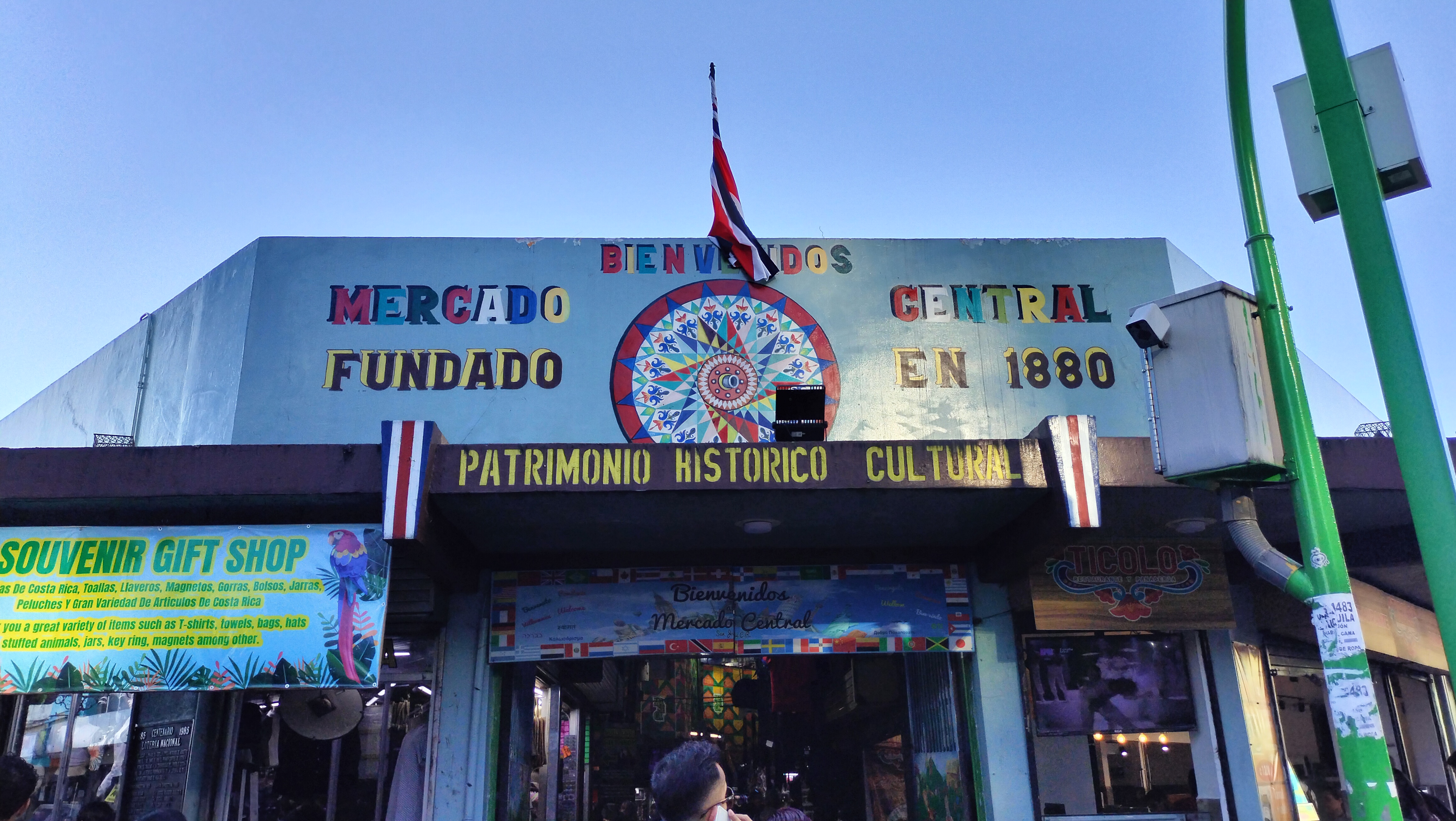
A living labyrinth of aisles, sodas, coffee, herbs, fruit, fish stalls and traditional trades in the heart of the Costa Rican capital.
The Municipality of San José identifies the Central Market as the city’s largest market and notes that it was founded in 1880. Its importance goes beyond commerce: the Ministry of Culture and Youth describes it as a space for passing on cooking, herbalism, handicrafts, ways of relating and other expressions of Costa Rican popular culture.
The current complex preserves traces of several architectural stages. An earthquake damaged the original building in 1888 and, decades later, sections were rebuilt with new materials and a modernist language.
Its history is intertwined with that of the capital: as San José consolidated as the country’s political and commercial center, the market became the point where the countryside delivers its products to the city. That “bridge” function between rural and urban life is still read in the variety of stalls, in the sodas’ recipes and in the trades kept alive along the aisles.
Here the visit is not about “seeing” a monument: it is about entering a city within the city.
Municipal source ↗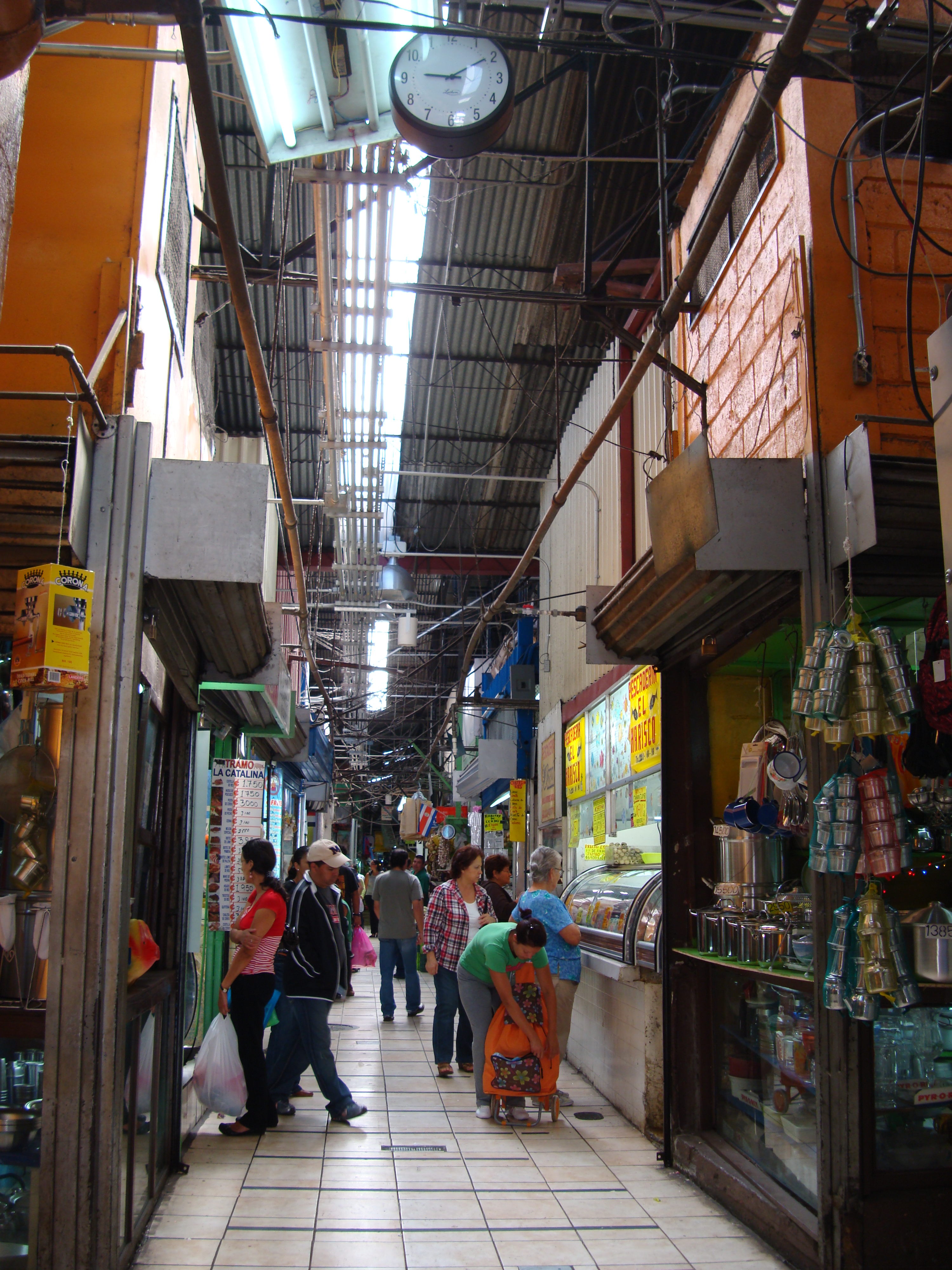
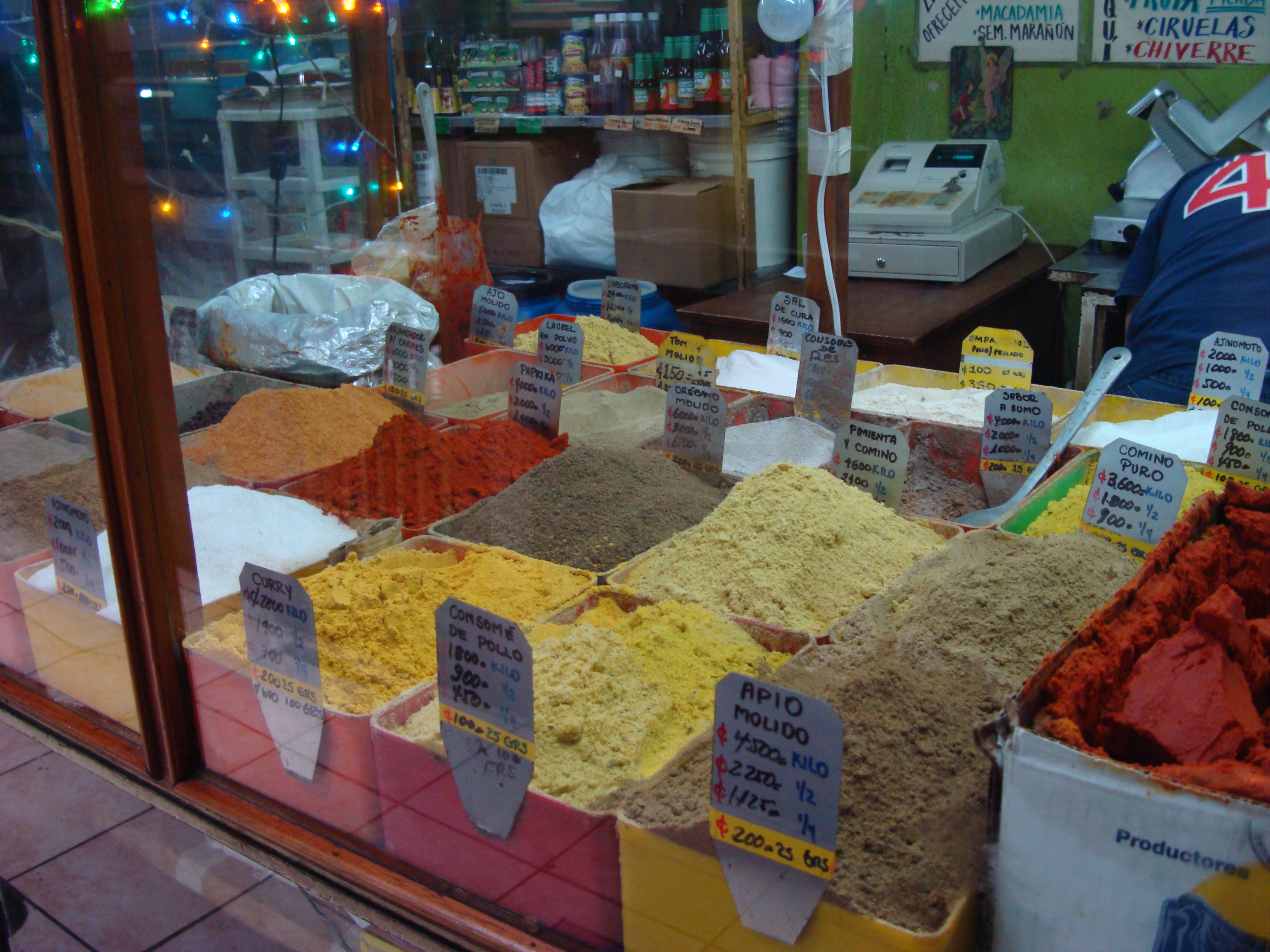
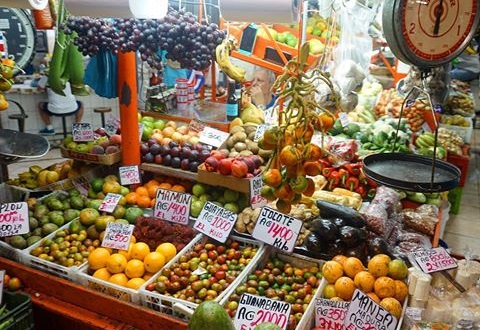
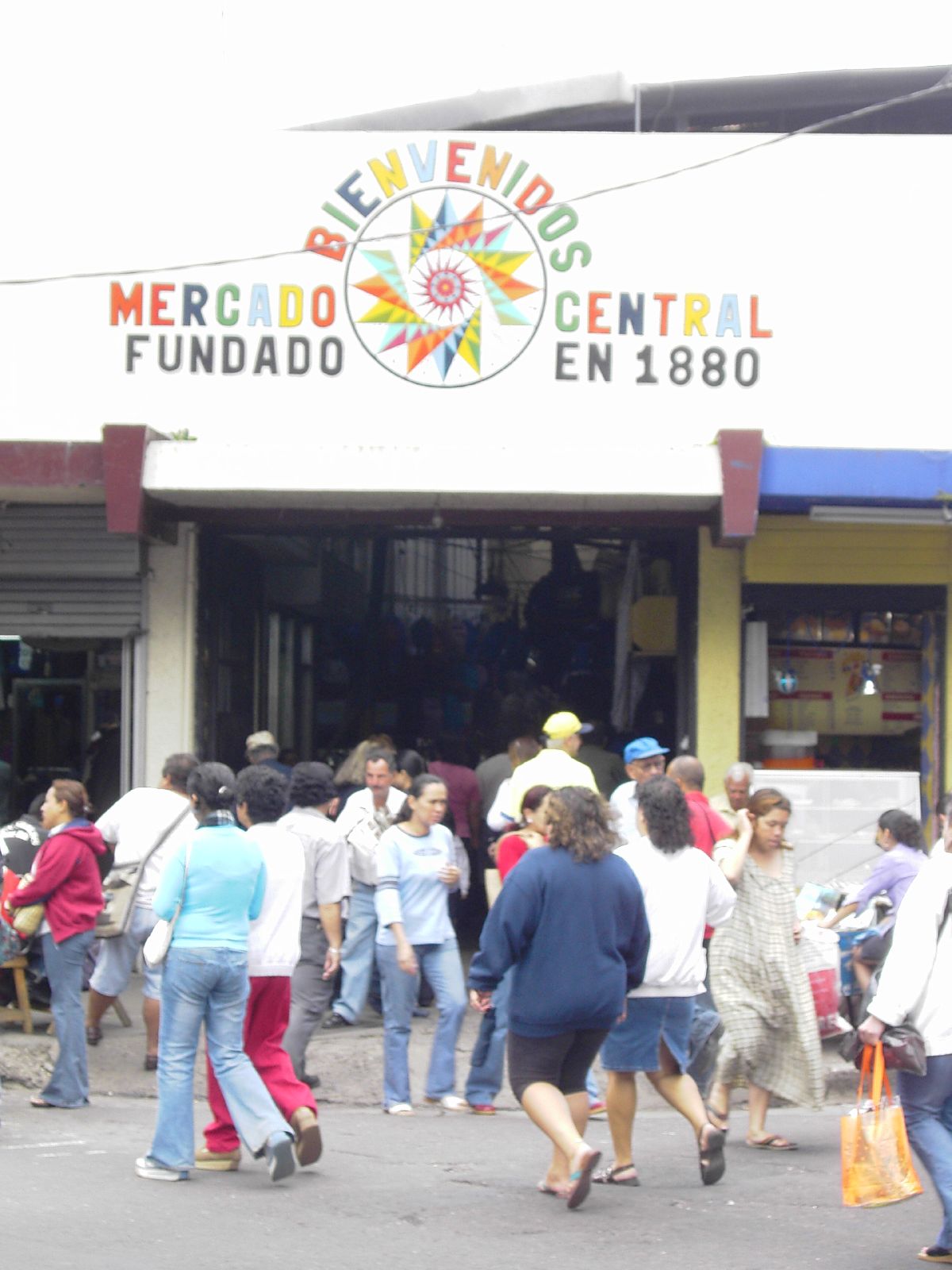
Real photographs under open licenses. Full authorship and licenses on the “Photo credits” page.
There is no admission ticket. Bring Costa Rican colones for small purchases; some stalls may accept other payment methods, but it is best not to assume this for all of them.
A weekday morning lets you appreciate the commercial rhythm. If you want to eat at a traditional soda, arriving before the lunch peak helps keep the experience calmer.
It sits in the heart of the urban center. There are paid public lots nearby, but supply and availability vary. For a tourist visit it is usually simpler to arrive by public transport, taxi or a ride app.
San José combines a mountain climate with a dry season (December–April) and a well-marked rainy season (May–November). The forecast shown here is obtained in real time from the public, free Open-Meteo API, with no keys and no tracking; for the country’s official forecast consult the National Meteorological Institute (IMN).
Loading current data…
Loading forecast…
Data source: Open-Meteo — free service, no API key and no cookies. Conditions can change quickly; for important decisions consult the official forecast of the National Meteorological Institute.
Look for home-style menus with casados, arroz con pollo, soups and olla de carne. The market is especially valuable for tasting everyday cooking, not only “tourist dishes”.
A cup of Costa Rican coffee or a fruit fresco works well as a pause between aisles. Ask about the day’s preparations and each stall’s specialties.
It is one of the flavors the Ministry of Culture itself mentions when describing the food tradition linked to the Central Market.
This guide receives no commissions from restaurants or stalls. The mentions are categories of experience, not advertising.
More than a place to shop, the Central Market is a space where trades, recipes and ways of life are passed on. The Municipality of San José and the Ministry of Culture and Youth describe precisely that transmission — of cooking, herbalism, handicrafts and forms of relating — as part of its heritage value.
Inside the aisles, the sodas prepare everyday home cooking in plain sight: casados, arroz con pollo, soups and olla de carne. They are spaces where the recipe and price respond to the public that works downtown, not to a menu thought only for tourists.
The sale of herbs and medicinal plants that the Ministry of Culture mentions when describing the market is not decoration: it connects the city with a herbal tradition that arrives from the countryside and from family traditions. If you do not know them, ask about their uses; this information does not replace medical advice.
Hand-churned sorbet is one of the flavors the cultural entity itself highlights when speaking of the food linked to the market. Fruit refrescos and ice cream made by traditional methods turn a simple craving into an experience passed from generation to generation.
The market was founded in 1880 and, just eight years later, an earthquake damaged the original building. Reconstruction happened in stages and, over time, new materials and a modernist language arrived; that is why different architectural traces coexist in the complex today.
Fruit, vegetables, meat, grains and spices arrive from different regions to supply the downtown stalls. Whoever visits early on a weekday can peek into that moment of unloading and arranging, when the market “wakes up” before the rest of the city.
It is not unusual to find businesses passed from parents to children that keep specialties that barely change: the same kind of knives, spices, sweets or leather goods offered decades ago. Behind each stall there is a family story and a trade the market helps preserve.
These stories combine information from official sources (Municipality of San José and Ministry of Culture and Youth) with general observations about market life. The references are of a type and never replace a guided visit by the people of the place themselves.
From Plaza de la Cultura or the National Theater, walk west through the pedestrian center. The market is in the Merced district, between 6th and 8th streets.
Numerous urban routes and terminals concentrate in downtown San José. Since routes change, confirm the most convenient stop according to your starting point on the day of the trip.
Use “Mercado Central de San José” as the destination and confirm the entrance where you want to get off. At peak traffic it may be faster to finish the last stretch on foot.
Downtown has traffic, one-way streets and limited parking. Consider a paid public lot and complete the trip on foot.
Reference address: Avenida Central and Avenida 1, between 6th and 8th streets, Merced, San José. Plus Code: WWM9+R59.
Google listing phone: +506 2222 5981.
Official source: Municipality of San José; para turismo nacional y regional, el portal Visit Costa Rica.
The visit is more enjoyable when you know where to find the basics. This section describes the types of service available inside and around the block, without recommending specific establishments.
The market has shared sanitary facilities inside. Bring your own toilet paper and low-denomination cash, as some services may charge a small usage fee.
Several paid public lots are found around the block, with hourly or fractional rates, and free on-street spaces are scarce. Downtown streets are narrow and many are one-way: leave time to maneuver or combine the car with a short walk.
Sodas, restaurants and cafeterias surround the block, alongside the food stalls of the building itself. There are quick options and Costa Rican cooking eateries; check hours, as several reduce service in the late afternoon.
Downtown San José concentrates hotels, hostels and other lodging options at walkable distances or short transit rides. If you stay outside downtown, check the public transport schedule to return after the visit.
Supermarkets, pulperías, pharmacies and ATMs are on the neighboring streets. The market itself also supplies fruit, vegetables, meat, grains and spices, very useful if you cook during your stay.
There is no gas station within the market block, so if you travel by car it is best to arrive with a full tank. For electric vehicles, public charging in downtown is limited: confirm points in your app according to the route.
One of the capital’s emblematic cultural buildings, next to Plaza de la Cultura.
The Pre-Columbian Gold Museum and other collections are beneath Plaza de la Cultura.
A simple stop to link the market with the historic axis of Parque Central and Avenida Central.
No. Entry to the market is free; each purchase, meal or service is paid directly at the corresponding stall.
For a first visit, between 1½ and 2 hours lets you walk without rush, have coffee and try traditional food.
A weekday morning is usually a good option to observe the commercial activity. Lunch periods and Saturdays can feel more crowded.
The Municipality of San José indicates that the Central Market has accessible facilities for people with reduced mobility.
There are fresh products, meat and fish, coffee, spices, herbs, leather goods, souvenirs, handicrafts and other traditional products.
Yes. Holidays, celebrations and operational decisions can alter the schedule. It is worth checking the municipal information before an important visit.
The market has shared sanitary facilities inside. It is good to bring your own toilet paper and low-denomination cash in case a service charges a small usage fee.
Around the market there are sodas, restaurants, cafeterias and food stalls, as well as hotels, hostels and lodgings of different categories in downtown San José. This guide recommends no specific establishments; check reviews and verify conditions before choosing.
The Central Market of San José opens Monday to Saturday 7:30–19:00 and Sundays 8:00–18:00 (Costa Rica time). If it is within those hours, it is open; exceptions may apply on holidays. The status indicator at the top of this page shows the live state according to Costa Rica local time.
According to the Municipality of San José: Monday to Saturday 7:30–19:00, and Sunday 8:00–18:00. Stalls and sodas may close earlier, especially in the late afternoon, so it is best to arrive with margin.
Yes, it opens Sundays 8:00–18:00. On holidays the schedule may be reduced or suspended by operational decisions; it is worth confirming with the municipal source before an important visit.
It has no fixed weekly closure day: it serves both Monday to Saturday and Sundays. It may close on some national holidays, so for marked dates it is recommended to verify the municipal schedule.
To reinforce the association with the physical place, the full name, Merced district, address, coordinates 9.934543 / -84.084579, institutional links and Wikidata identifier Q7414518 are used.